
Training Results Depend on How You Fuel Your Body
When people begin a fitness journey, most of their attention naturally goes toward workouts. They focus on exercises, training frequency, or how hard they’re pushing in the gym. While training is essential, one of the most common reasons progress stalls has little to do with effort — and everything to do with nutrition.
Fitness results are not created by exercise alone. They are the product of training, recovery, and proper fueling working together.
At Nu Fitness Oakland, nutrition guidance is included as part of personal training because sustainable progress requires alignment between how you train and how you eat. You don’t need extreme dieting or complicated rules, but you do need a strategy that supports your body’s demands.
Training Creates the Signal — Nutrition Builds the Result
Strength training and exercise act as a stimulus. When you lift weights or challenge your cardiovascular system, you create microscopic stress within muscle tissue and metabolic systems. Adaptation happens afterward, during recovery, when the body repairs and rebuilds itself stronger than before.
That rebuilding process depends heavily on nutrition.
Without adequate fuel, the body struggles to recover properly. Energy levels drop, performance declines, and progress slows. In some cases, individuals may even lose muscle despite training consistently.
This is why nutrition should never be viewed as separate from fitness. It is the material your body uses to respond to training.
Protein: The Foundation of Progress
Among all nutritional variables, protein intake plays the most critical role in supporting a training program. Protein provides the amino acids necessary for muscle repair, growth, and preservation.
Adequate protein intake helps:
- Support muscle recovery after workouts
- Maintain lean mass during fat loss
- Improve strength adaptations
- Support metabolic health
- Increase satiety and appetite regulation
Many people — especially those trying to lose weight — unintentionally underconsume protein. This becomes particularly problematic when training intensity increases.
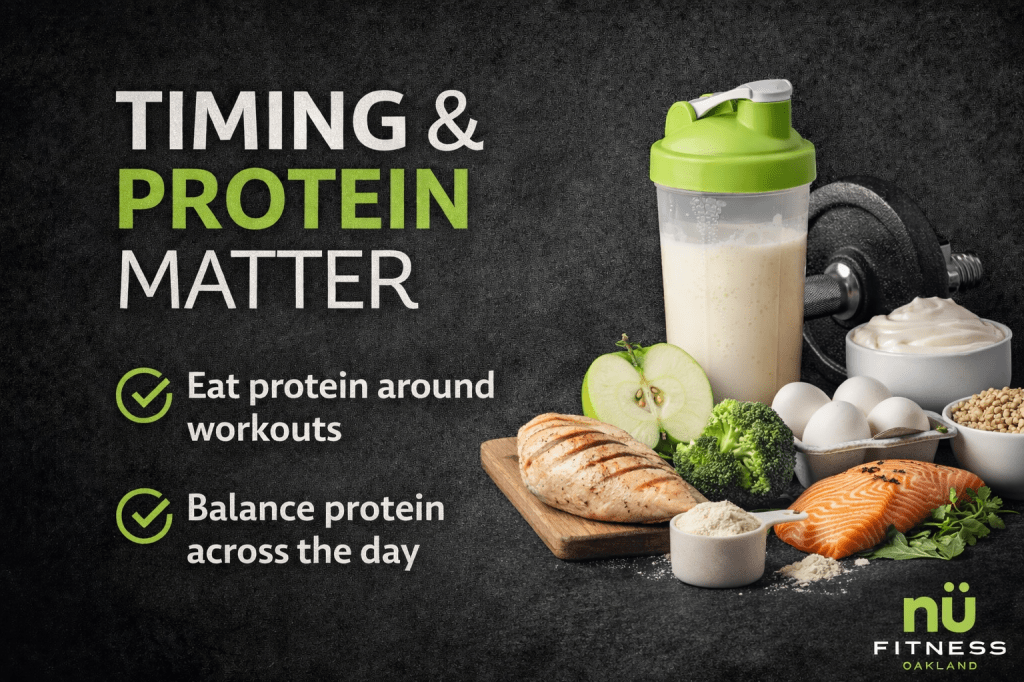
A well-supported training program typically distributes protein intake consistently throughout the day rather than relying on a single large meal.
Nutrition Timing Matters More Than Most People Think
While total daily nutrition is the biggest driver of results, timing can meaningfully improve performance and recovery.
Proper pre-training nutrition helps provide energy for workouts, allowing individuals to train with higher quality and better technique. Meals containing carbohydrates and protein before training can improve strength output and reduce fatigue.
Post-training nutrition plays an equally important role. Consuming protein alongside carbohydrates after workouts helps replenish energy stores and initiate muscle repair processes more efficiently.
The goal isn’t perfection — it’s consistency. Small improvements in fueling habits often produce noticeable improvements in energy, recovery, and long-term progress.
The Growing Role of GLP-1 Medications in Weight Loss
An increasing number of individuals are using GLP-1 medications as part of medically supervised weight loss strategies. These medications can be highly effective at reducing appetite and supporting fat loss, but they introduce an important consideration that is often overlooked.
Rapid weight loss does not automatically mean optimal body composition change.
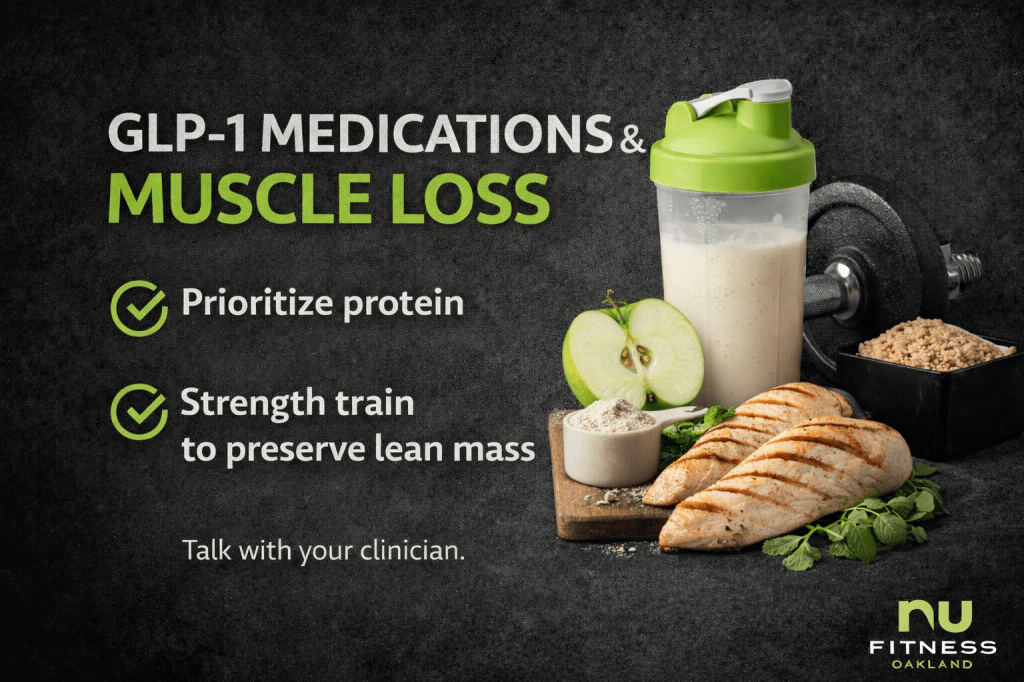
Because GLP-1 medications suppress appetite, many individuals unintentionally consume too little protein and overall energy. When this happens, the body may lose muscle mass alongside body fat.
This matters because muscle is metabolically active tissue that helps regulate metabolism, strength, mobility, and long-term weight maintenance.
Losing significant muscle during weight loss can lead to:
- Reduced metabolic rate
- Increased fatigue
- Greater likelihood of weight regain
- Declines in strength and physical function
Why Strength Training Is Essential When Using GLP-1 Medications
For individuals using GLP-1 medications, strength training becomes even more important.
Resistance training provides the signal that tells the body to preserve lean muscle tissue during periods of weight loss. When combined with sufficient protein intake, strength training helps shift weight loss toward body fat rather than muscle.
This combination supports healthier, more sustainable outcomes by improving body composition instead of simply lowering scale weight.
In practice, this means pairing medical weight loss strategies with structured resistance training and intentional nutrition guidance — not relying on appetite suppression alone.
Sustainable Progress Comes From Integration
One of the biggest advantages of personalized coaching is the ability to integrate training and nutrition into a single, cohesive plan. Rather than following disconnected workout routines or restrictive diets, clients benefit from guidance that evolves alongside their goals, schedule, and physiology.
At Nu Fitness, nutrition conversations often focus on practical habits:
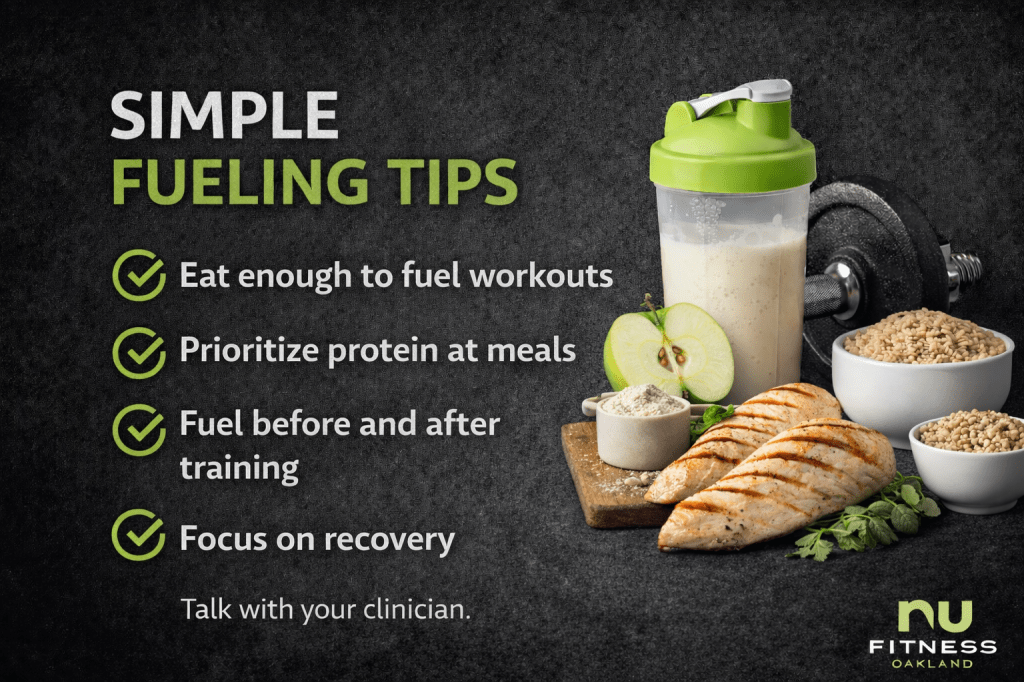
- Eating enough to support training
- Prioritizing protein at meals
- Fueling workouts appropriately
- Supporting recovery and sleep
- Avoiding extreme restriction
The goal is not short-term perfection but long-term sustainability.
Fitness Is Not About Eating Less — It’s About Fueling Better
Many people enter fitness with the assumption that progress requires constant restriction. In reality, successful training programs often require learning how to fuel adequately, especially as activity levels increase.
Proper nutrition allows you to train harder, recover faster, maintain muscle, and sustain results over time. When workouts and nutrition support one another, progress becomes more predictable and far less stressful.
Whether someone’s goal is fat loss, strength development, improved health markers, or longevity, the principle remains the same:
Training provides the stimulus. Nutrition determines how well your body adapts.
Building Results That Last
The most successful fitness journeys are not defined by short bursts of motivation but by systems that can be maintained for years. Aligning nutrition with training helps create those systems, allowing progress to continue without burnout or extreme measures.
When exercise, recovery, and nutrition work together, clients don’t just lose weight or gain strength — they build resilience, confidence, and long-term health.
If you’re investing time into training, make sure your nutrition is supporting the work you’re doing. The strongest results happen when both move in the same direction.

 Nu Fitness Oakland Blog